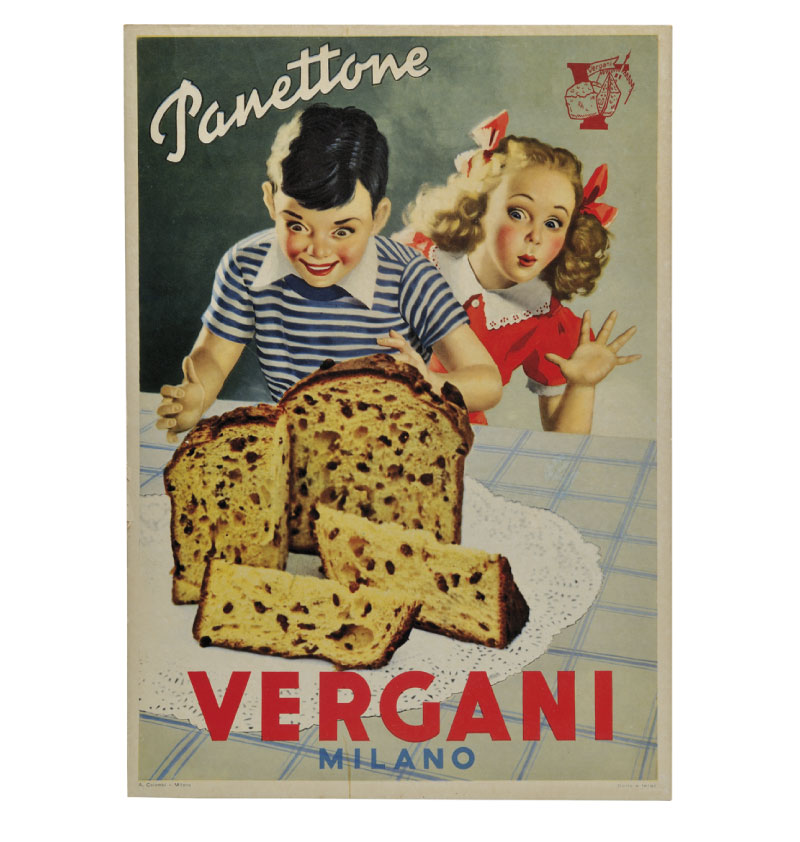
Vergani Packaging

Vergani Packaging

Vergani, during an interview, tells the story of the family and their focus on the quality of ingredients, and talks about market changes and the importance of packaging.

immagine

From tradition to the pursuit of quality

A good story

Vergani's story is a family tale that spans four generations. From the original pastry shop in Milan, founded in 1944, the values, traditions, and secrets that have made it a recognized brand of excellence in Italy and abroad are still carefully preserved. After seventy years, nearly 2,000,000 panettoni are produced annually from the workshop (just a few hundred meters from where the first pastry shop was established). Today, the Vergani family is the only (and last) Milanese producer of panettone on an industrial scale in Milan, naturally following the original recipe passed down by great-grandfather Angelo.

immagine fascia
immagine fascia

Authentic quality

"In today’s market, which offers a wide range of products, from low-cost commercial ones to artisanal creations by renowned chefs, what are the criteria for choosing a truly high-quality panettone?"

The panettone is technically the most complex dessert to make. It requires a high level of expertise, specific equipment, and a deep understanding of raw materials. Making a panettone takes almost 3 days, and there are about 15 production stages, all essential for its success. In short, creating a quality product demands significant experience.
Consumers can be guided in their purchase by following a few simple rules. First of all, by reading the label— not the front one, but the one under the product. Some ingredients will show their percentages, others their origin. These are key elements for comparison. Price is also an important factor. Making a quality panettone comes with specific costs. It’s like many other products, such as wine. A bottle priced at 20 € and one priced at 3 € are unlikely to be of the same quality. Lastly, the history of a brand is another good clue. We’ve been making panettoni for almost 80 years.

The recipe of tradition

"We know that one of your secrets is the sourdough starter created by Angelo Vergani in the first half of the 20th century, kept in a cloth and refreshed three times a day, as per true Milanese tradition. This is a time and energy-consuming process that seems almost inconceivable in a modern society where everything is extremely dynamic. How does this virtuous process affect the quality, but also the costs, compared to conventional production methods?"

Naturally, working the way it was done in the past has significant effects, on quality and inevitably on costs as well. Every company chooses its path. Vergani chose its path in 1944 and has stayed on it ever since. The world of panettone is very diverse. There are many different products in the market. We are the last Milanese still making panettoni, and it is a great responsibility. Consumers increasingly ask for a product, especially at Christmas, that is gratifying, and they want a quality product, made with care, good and safe ingredients. We want our panettone to be special, and we want those who consume it to do so with the greatest joy.

immagine fascia
immagine fascia

Raw materials

"You have always paid great attention to selecting the raw materials for your panettone, as well as for the other pastries you offer on the market. What criteria do you use when choosing the ingredients?"

As mentioned before, we want our product to be a treat for those who consume it. The choice of raw materials is one of the aspects that makes the difference, as it does in every product. For example, about ten years ago, we decided to select a new supplier for candied oranges. We contacted all the reputable producers in the market and asked them to send us samples of their best raw materials. At that point, we weren’t concerned with the prices. We began testing the different options and chose the best one, and later we were informed about the price.

Between tradition and innovation

"Alongside your line of sweets inspired by ancient recipes, you also offer products designed to meet the demands of an increasingly demanding and diverse market, such as organic, gluten-free, vegan, etc. In this sense, you have also obtained important national and international certifications. How does Vergani’s ‘traditional’ approach align with a rapidly changing and evolving market?"

If I had to choose just two important values for Vergani, I would say tradition and innovation. They may seem contradictory, but they are not. The market changes, and consumers make their choices differently. We cannot ignore this. Keep in mind that panettone originated in the medieval period as a large white bread, and over the centuries, butter, sugar, eggs, candied citron, and oranges were added, with candied fruits only appearing at the beginning of the last century. Yet, it has always been the pan de ton (in Milanese, the "o" is pronounced as "u"), the classic panettone. For us, the classic panettone, with raisins and candied oranges, remains the most important product, but today we offer around a hundred recipes, some truly gourmet. This is what consumers are asking for today, and it is right for companies to make an effort to interpret these needs.

immagine fascia
immagine fascia

The importance of packaging

"Your strengths are certainly your artisanal care and quality. How important is the packaging of your products in communicating these fundamental values to potential consumers?"

Packaging plays a very important role. The first thing the consumer sees is the packaging of a product. It allows you to explain how the product is made, which raw materials you've used, and what production system you've chosen. It also gives you the chance to tell your story. In the past, this wasn’t the case. In old shops, the clerk and the customer knew each other and interacted, with the clerk offering advice to the customer. Today, the role of the clerk is taken on by the packaging. That’s why there should be a kind of ethical code for packaging, though unfortunately that is impossible. Companies should strive to create packaging that aligns with the product. Consumers need a wrapper that explains simply what they’re buying.